As Institution Rates Rebound, Squires Announces Plan to Return Merits Prong to PTAB
The USPTO has made a series of changes to the process governing institution in America Invents Act (AIA) review over the past 18 months.
In March 2025, then-Acting Director Coke Morgan Stewart established an interim process under which she would decide requests for discretionary denial herself instead of a PTAB panel doing so, based on a broader and more restrictive set of factors based on Patent Trial and Appeal Board (PTAB) precedent. Then, in October, Director John Squires announced that he would now decide all aspects of AIA review institution himself, including discretionary considerations as well as the merits. Under that director-led process, most decisions receive summary decisions that provide little, if any, insight into the director’s rationale for denying or granting institution.
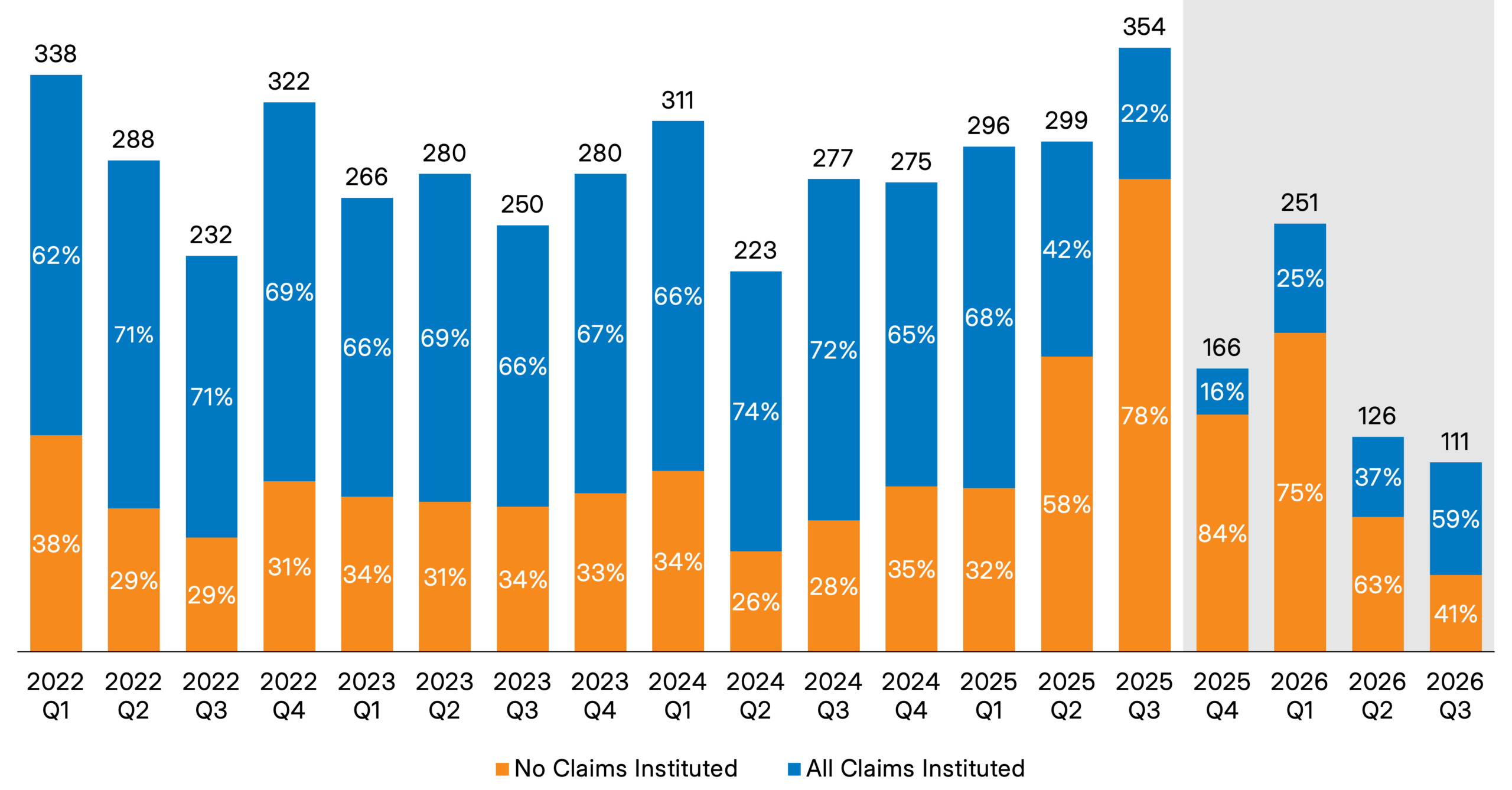
Institution rates fell dramatically over the course of 2025 as a result of these changes, dropping to a low of 16% in Q4 2025 for decisions decided by Squires (i.e., those not already referred to panels under the interim process). That said, the Squires-only institution rate has steadily climbed back up in subsequent quarters—reaching 59% in Q3 2026.
As Q3 drew to a close, Squires then announced that he intends to hand the merits prong back to the PTAB in October 2026, essentially restoring the earlier bifurcated process one year after taking over that portion of the analysis.
In written testimony submitted to the Senate IP Subcommittee for a September 29, 2026 USPTO oversight hearing, Squires characterized the centralization of first discretionary institution review and then merits institution in the Director’s office as a “reset” that “allowed the Office to articulate policy consistently, apply the governing thresholds with single accountability, and develop a more complete institutional record”.
Squires also detailed various actions that he characterized as serving those priorities—including the issuance of precedential decisions like Magnolia Technologies v. Kurin, which detailed the principles underpinning the Director’s current approach to discretionary denial; the Learning from Outcomes to Optimize Patents (LOOP) program, which takes information on apparent examination errors learned during AIA review and feeds it back into the examination process; the aforementioned rulemaking proposal, detailed further below; and decisions that more stringently enforce the requirement to disclose real parties in interest (RPIs) in PTAB proceedings.
Squires additionally touted the results of an internal program called “PTAB STRONG” (“Support, Training, Resources, Opportunities, Networking, and Guidance”) designed “to build institutional alignment among” APJs and the USPTO Director’s office: This program, per Squires, “combined internal learning with engagement from experienced academics and practitioners on institution standards and Board administration” in order “to ensure that the reset became institutional knowledge rather than a set of individual decisions”.
Notably, Squires revealed that due to “progress” made under this initiative, he would be handing the merits prong of the institution process back to PTAB panels: “Based on the progress of that work, I have announced my intention to return merits institution determinations to the PTAB in October, one year after they were centralized. Accountability and institutional development should reinforce one another”.
See RPX’s third-quarter review for more on changes at the PTAB, as well as the other key trends shaping patent risk so far this year.