PTAB Petitions Rebound Slightly as Squires Returns to Bifurcated Institution
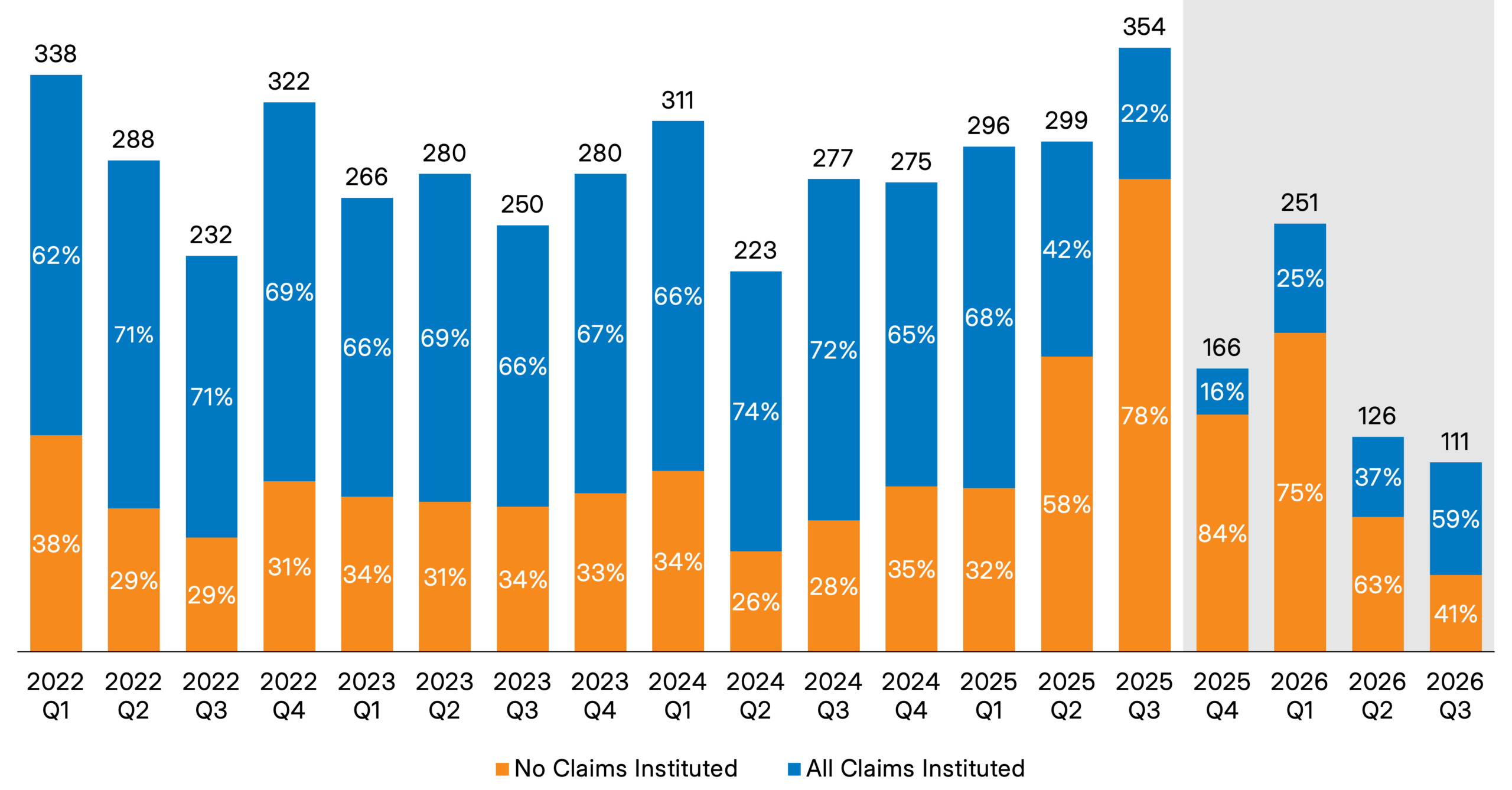
Patent Trial and Appeal Board (PTAB) petitions rebounded slightly in Q3 2026 after plummeting to historic lows in Q2: The second quarter saw just 70 new petitions for America Invents Act (AIA) review, marking the PTAB’s lowest-ever full quarter since its launch in 2012. Filings rose in Q3 2026 to 105 new petitions, including 97 inter partes reviews (IPRs) and eight post-grant reviews (PGRs), but this figure still falls far short of the same quarter one year prior (when 354 petitions were filed).
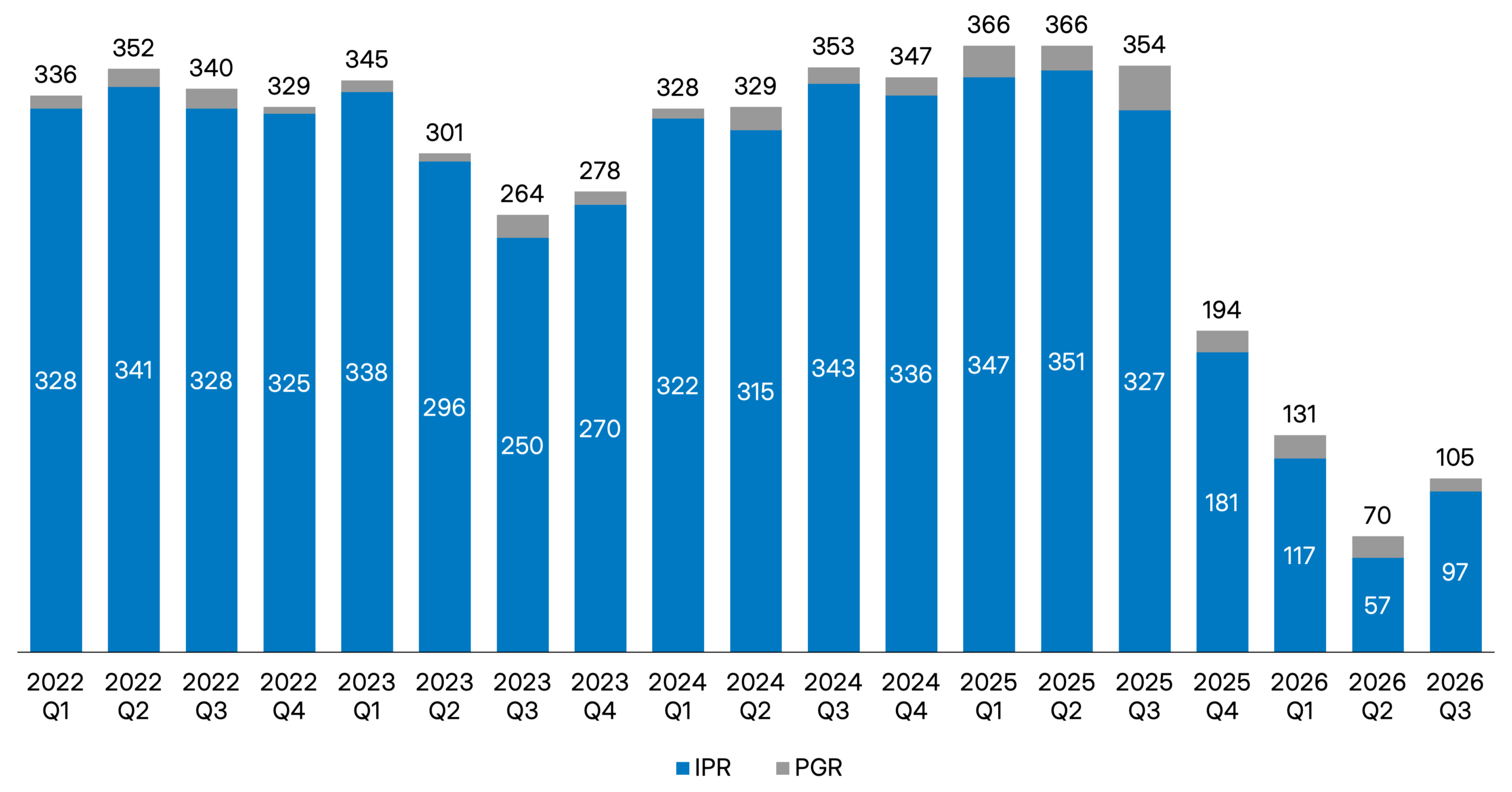
This overall downturn was precipitated by a series of changes at the USPTO over the past 18 months that have increasingly limited access to the PTAB—perhaps most notably, through new processes governing institution in AIA reviews.
In March 2025, then-Acting Director Coke Morgan Stewart created an interim process where she would decide requests for discretionary denial, while leaving the assessment of the merits to panels of PTAB administrative patent judges (APJs). Under that interim process, Stewart would make a discretionary denial determination by applying an expanded set of discretionary factors based on various PTAB precedents—including one factor where institution is less likely for older patents based on the “settled expectations” of the parties, and another where a petition may be denied based on a prior adjudication of validity for the challenged claims by the USPTO or another forum. The Acting Director would then refer the surviving petitions to a panel for consideration of the merits and other nondiscretionary institution factors. Despite the shift in discretionary decision-making back to the acting director, Stewart maintained the prior practice of issuing full written decisions explaining the reason for granting or denying discretionary denial.
Then, in October 2025, Director John Squires established an updated process under which he would now decide all aspects of AIA review institution himself, including discretionary considerations and the merits. That director-led institution procedure built upon the March 2025 interim process, superseding it to the extent that most petitions now only receive summary decisions that provide little, if any, insight into the director’s rationale for denying or granting institution; and to the extent that the nondiscretionary aspects of institution are no longer referred to panels.
As Q3 drew to a close, Squires next announced that he intends to hand the merits prong back to the PTAB in October 2026, essentially restoring the earlier bifurcated process one year after taking over that portion of the analysis.
In written testimony submitted to the Senate IP Subcommittee for a September 29, 2026 USPTO oversight hearing, Squires characterized the centralization of first discretionary institution review and then merits institution in the Director’s office as a “reset” that “allowed the Office to articulate policy consistently, apply the governing thresholds with single accountability, and develop a more complete institutional record”. Squires characterized the return to a bifurcated process as made possible by the success of an initiative designed to institutionalize the lessons learned from that reset, stating that “[a]ccountability and institutional development should reinforce one another”.
See RPX’s third-quarter review for more on the impact of changes at the PTAB—including with respect to institution rates themselves.