East Texas Saw Two of the Top Damage Awards of Q2—and Some Notable Defense Wins
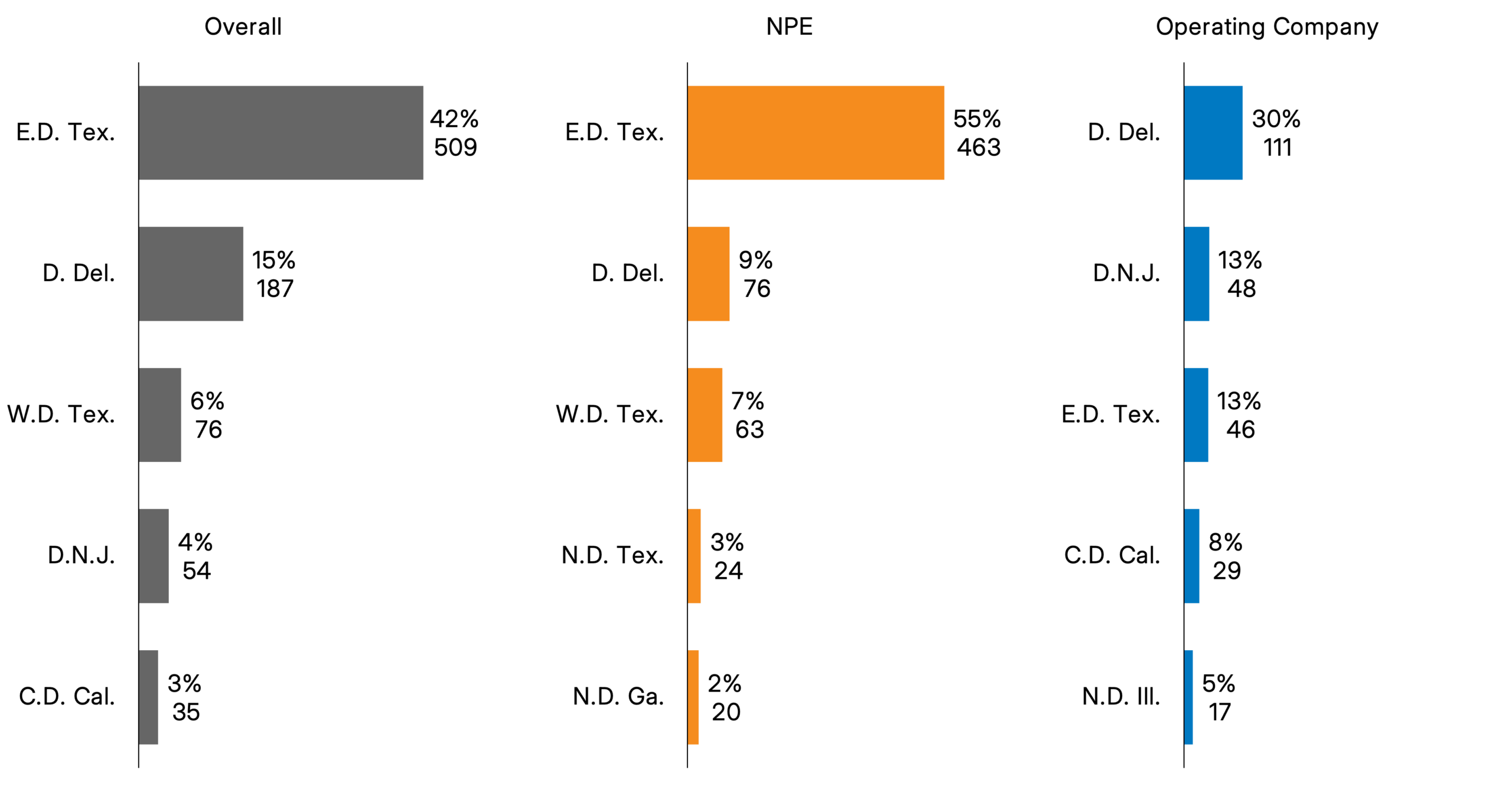
The Eastern District of Texas was the top patent district for overall litigation (i.e., with no filter for plaintiff type) and NPE litigation in Q2 2026, also holding the number-three spot for operating company litigation. In second for overall litigation was the District of Delaware, which held third place for NPE litigation but was the most popular district for operating company litigation. Meanwhile, the Western District of Texas trailed behind Delaware in third place for overall litigation and second for NPE litigation, taking fifth place for operating company filings.
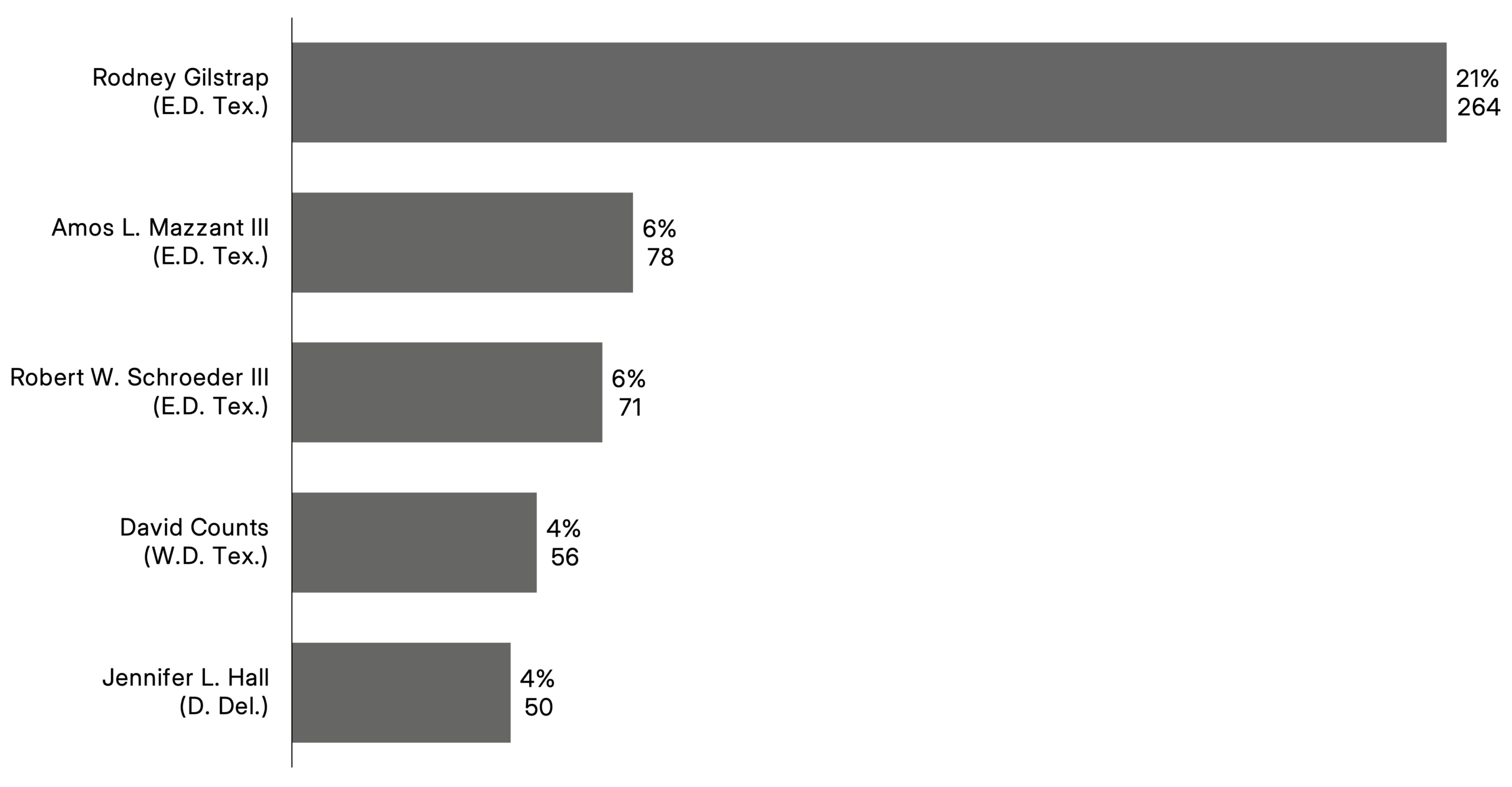
Given the sheer volume of litigation being filed in East Texas, it is not a surprise that the district played host to some of the quarter’s most significant jury verdicts.
This included the quarter’s top damage award, returned on June 19 for funded plaintiff Aspen Networks, Inc.: The jury awarded $190M, finding the infringement of a single patent through the provision of Voice-over-Wi-Fi (VoWiFi) calling services by defendant Verizon (Verizon Wireless). Aspen’s cases against Verizon and fellow carriers AT&T (AT&T Mobility) and Deutsche Telekom (T-Mobile) were consolidated for pretrial purposes and then deconsolidated, on June 8, 2026, prior to trial as to Verizon. Trials will next be held against AT&T and T-Mobile, in that order, but those do not yet appear to have been scheduled.
Another plaintiff-side verdict came on April 16, when an Eastern District of Texas jury awarded $17M to Cyandia, Inc.—marking the third-largest damage award of the second quarter. The jury found one claim from each of two tried patents infringed by defendant SAP and not proven obvious. The award was characterized as a running royalty on the verdict form, and the jury also found the infringement to have been willful. Cyandia is one of six plaintiffs to have recorded a security interest in its patent holdings back in December 2023, each in favor of the same funding operation.
However, East Texas also saw some notable defense victories this past quarter. Among them was a noninfringement verdict for Cisco in the first case filed in the litigation campaign of EireOg Innovations Limited, an Atlantic IP Services Limited plaintiff. The jury also answered in the affirmative a question relevant to a “control theory” for a wider license defense, finding that Cisco had shown that the tried patent was controlled, licensable, or enforceable by Atlantic IP after the effective date of a certain license—a finding that echoes a similar one in the Western District of Texas cases between Fortress Investment Group LLC’s VLSI Technology LLC and Intel.
Another noteworthy defense win came not from a jury but instead from a bench trial: On April 22, District Judge Rodney Gilstrap ruled that “under the doctrine of implied waiver, [Headwater Research LLC] cannot enforce the asserted patents against” Verizon. The patents referenced are the two that a jury found willfully infringed last year, awarding Headwater $175M in damages. Per the court, “Verizon’s belief—that Headwater would not enforce patents it knew Verizon was infringing in 2017—was both reasonable and induced by Headwater’s conduct. Every law student, early on, learns the equitable concept of unclean hands”. Headwater has appealed that decision and the resulting final judgment in Verizon’s favor, while the defendant has cross-appealed the verdict and other decisions.
See RPX’s second-quarter review for more on venue and other trends shaping patent litigation risk so far this year.