PTAB Petitions Cratered in Q2 as Squires Imposed Further Limits Based on Parallel Litigation
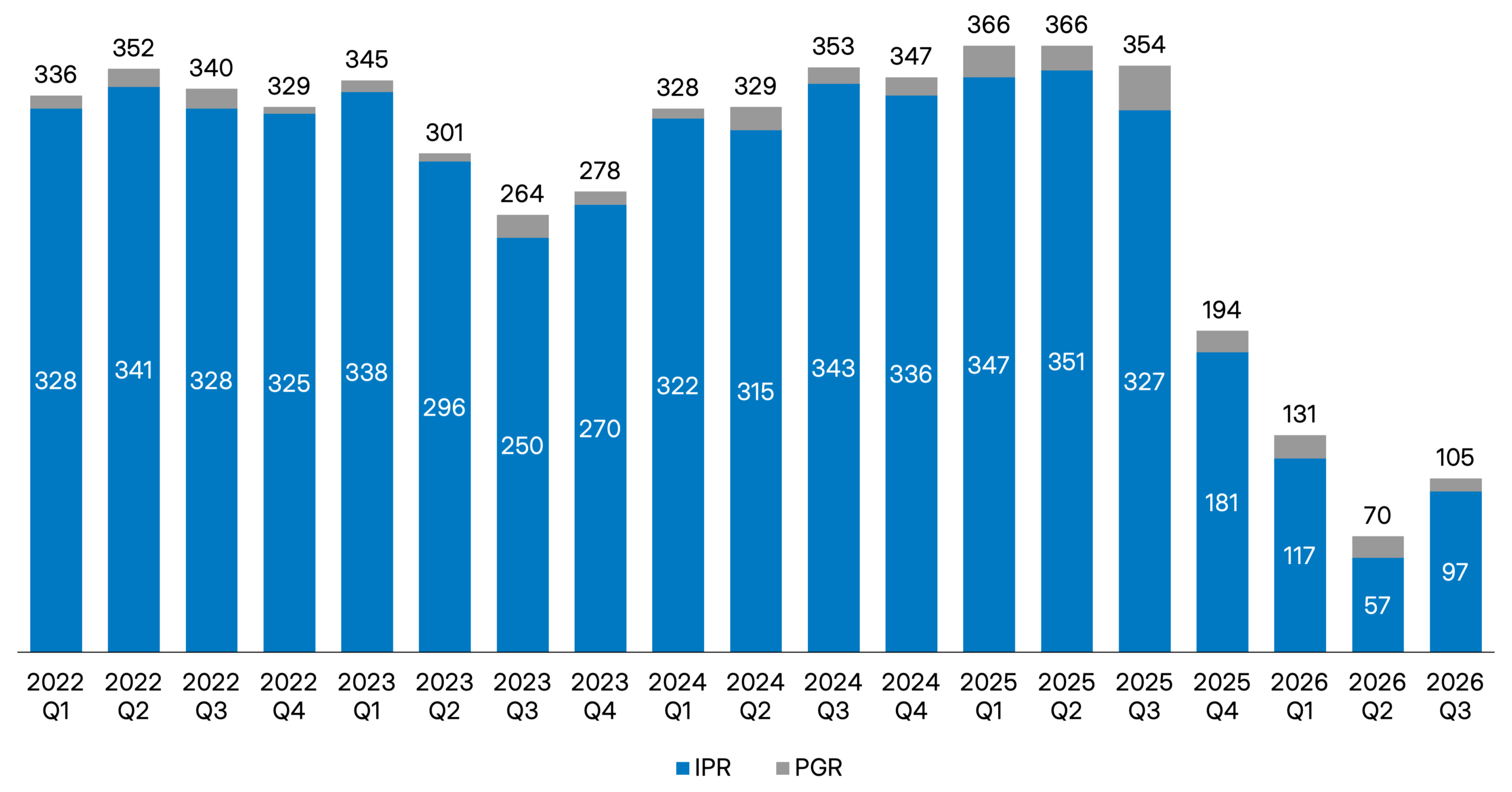
Filings at the Patent Trial and Appeal Board (PTAB) continued their dramatic decline in the second quarter of 2026. In Q2, the Board saw just 70 petitions for America Invents Act (AIA) review, including 57 inter partes reviews (IPRs) and 13 post-grant reviews (PGRs). This marks the PTAB’s lowest-ever full quarter: Fewer petitions were filed in Q2 than in the PTAB’s first full quarter, Q4 2012, during which 80 petitions were filed, with just Q3 2012—during which AIA reviews were only available for the last two weeks—seeing lower numbers.
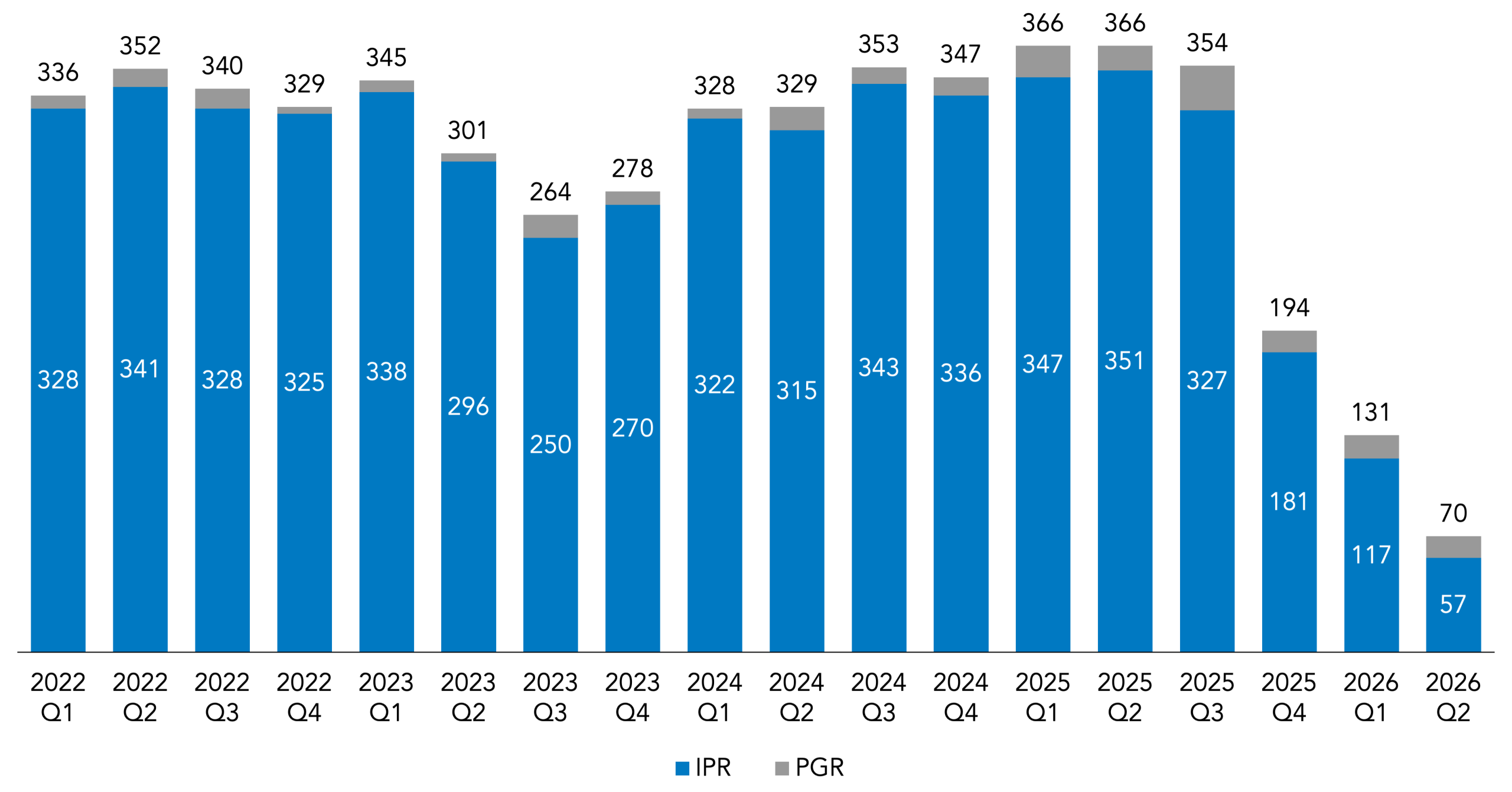
The cause of this downturn has been an ongoing series of changes at the USPTO that have significantly limited the availability of AIA reviews. Among those changes has been a revamp of the substantive and procedural standards governing institution, implemented over the course of the past year.
In March 2025, then-Acting Director Coke Morgan Stewart established an interim process under which she would decide requests for discretionary denial herself, rather than a PTAB panel doing so. Under that interim process, Stewart would make that determination by applying an expanded set of discretionary factors based on various PTAB precedents—including one factor where institution is less likely for older patents based on the “settled expectations” of the parties, and another where a petition may be denied based on a prior adjudication of validity for the challenged claims by the USPTO or another forum. The Acting Director would then refer the surviving petitions to a panel for consideration of the merits and other nondiscretionary institution factors.
Then, in October 2025, newly confirmed Director John Squires announced that he would now decide all aspects of AIA review institution himself, including discretionary considerations as well as the merits. That director-led institution procedure built upon the March 2025 interim process, superseding it to the extent that most petitions now only receive summary decisions that provide little, if any, insight into the director’s rationale for denying or granting institution; and to the extent that the nondiscretionary aspects of institution are no longer referred to panels.
Since then, Squires has made additional changes that have further constrained IPR access, including a new set of discretionary factors designed to ensure that AIA review serves as an “alternative” to district court litigation and rules expanding access to director review based on the status of parallel litigation.
See RPX’s second-quarter review for more on those changes, including their impact on institution rates and ex parte reexaminations.